
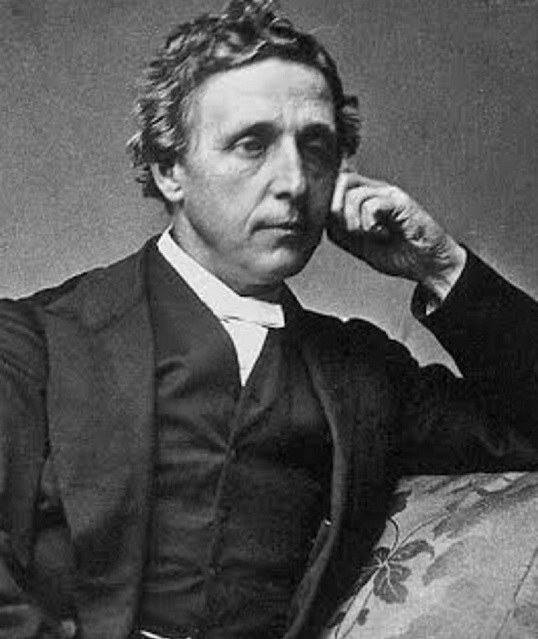
Charles Lutwidge Dodgson (27 January 1832 – 14 January 1898), better known by his pen name Lewis Carroll, was an English author, poet, mathematician, photographer and Anglican priest.
Nemo enim ipsam voluptatem quia voluptas sit aspernatur aut odit aut fugit, sed quia consequuntur magni dolores eos qui ratione voluptatem sequi nesciunt.
The most famous works
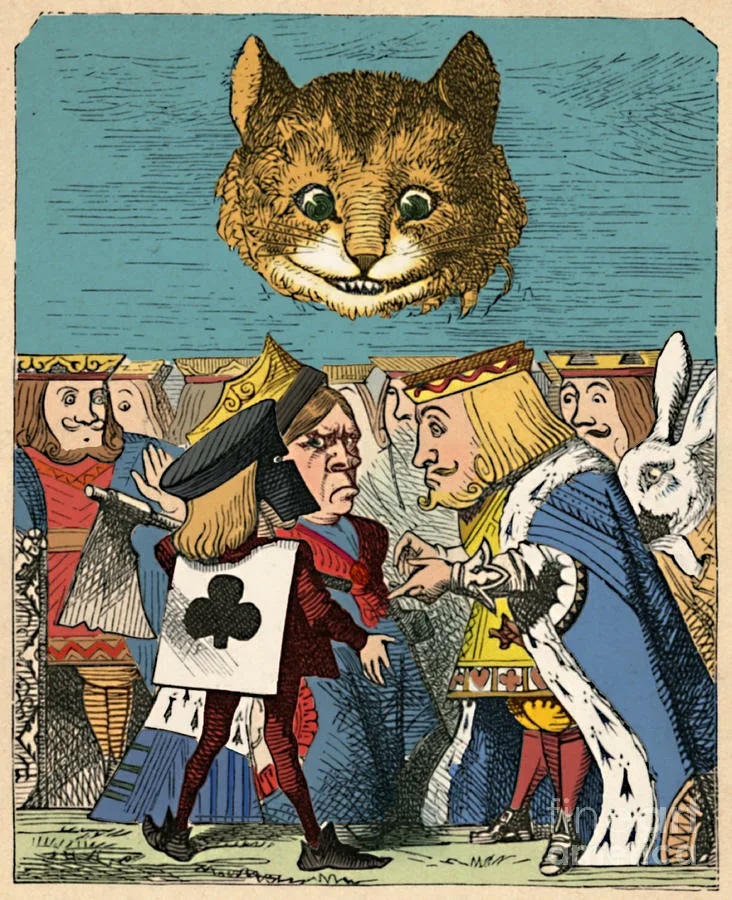
His most notable works are Alice's Adventures in Wonderland (1865) and its sequel Through the Looking-Glass (1871). He was noted for his facility with word play, logic, and fantasy. His poems Jabberwocky (1871) and The Hunting of the Snark (1876) are classified in the genre of literary nonsense
His life.
Dodgson was born on 27 January 1832 at All Saints' Vicarage in Daresbury, Cheshire, the oldest boy and the third oldest of 11 children. When he was 11, his father was given the living of Croft-on-Tees, Yorkshire, and the whole family moved to the spacious rectory. This remained their home for the next 25 years. Charles' father was an active and highly conservative cleric of the Church of England
During his early youth, Dodgson was educated at home. His "reading lists" preserved in the family archives testify to a precocious intellect: at the age of seven, he was reading books such as The Pilgrim's Progress. He also spoke with a stammer – a condition shared by most of his siblings – that often inhibited his social life throughout his years. At the age of twelve he was sent to Richmond Grammar School (now part of Richmond School) in Richmond, North Yorkshire.

In 1846, Dodgson entered Rugby School, where he was evidently unhappy, as he wrote some years after leaving: "I cannot say ... that any earthly considerations would induce me to go through my three years again ... I can honestly say that if I could have been ... secure from annoyance at night, the hardships of the daily life would have been comparative trifles to bear." He did not claim he suffered from bullying, but cited little boys as the main targets of older bullies at Rugby. Stuart Dodgson Collingwood, Dodgson's nephew, wrote that "even though it is hard for those who have only known him as the gentle and retiring don to believe it, it is nevertheless true that long after he left school, his name was remembered as that of a boy who knew well how to use his fists in defence of a righteous cause", which is the protection of the smaller boys.
He left Rugby at the end of 1849 and matriculated at the University of Oxford in May 1850 as a member of his father's old college, Christ Church. After waiting for rooms in college to become available, he went into residence in January 1851. He had been at Oxford only two days when he received a summons home. His mother had died of "inflammation of the brain" – perhaps meningitis or a stroke – at the age of 47.
His early academic career veered between high promise and irresistible distraction. He did not always work hard, but was exceptionally gifted, and achievement came easily to him. In 1852, he obtained first-class honours in Mathematics Moderations and was soon afterwards nominated to a Studentship by his father's old friend Canon Edward Pusey. In 1854, he obtained first-class honours in the Final Honours School of Mathematics, standing first on the list, and thus graduated as Bachelor of Arts. He remained at Christ Church studying and teaching, but the next year he failed an important scholarship exam through his self-confessed inability to apply himself to study. Even so, his talent as a mathematician won him the Christ Church Mathematical Lectureship in 1855, which he continued to hold for the next 26 years. Despite early unhappiness, Dodgson remained at Christ Church, in various capacities, until his death, including that of Sub-Librarian of the Christ Church library, where his office was close to the Deanery, where Alice Liddell lived.
a.
Artistic activities.
From a young age, Dodgson wrote poetry and short stories, contributing heavily to the family magazine Mischmasch and later sending them to various magazines, enjoying moderate success. Between 1854 and 1856, his work appeared in the national publications The Comic Times and The Train, as well as smaller magazines such as the Whitby Gazette and the Oxford Critic.
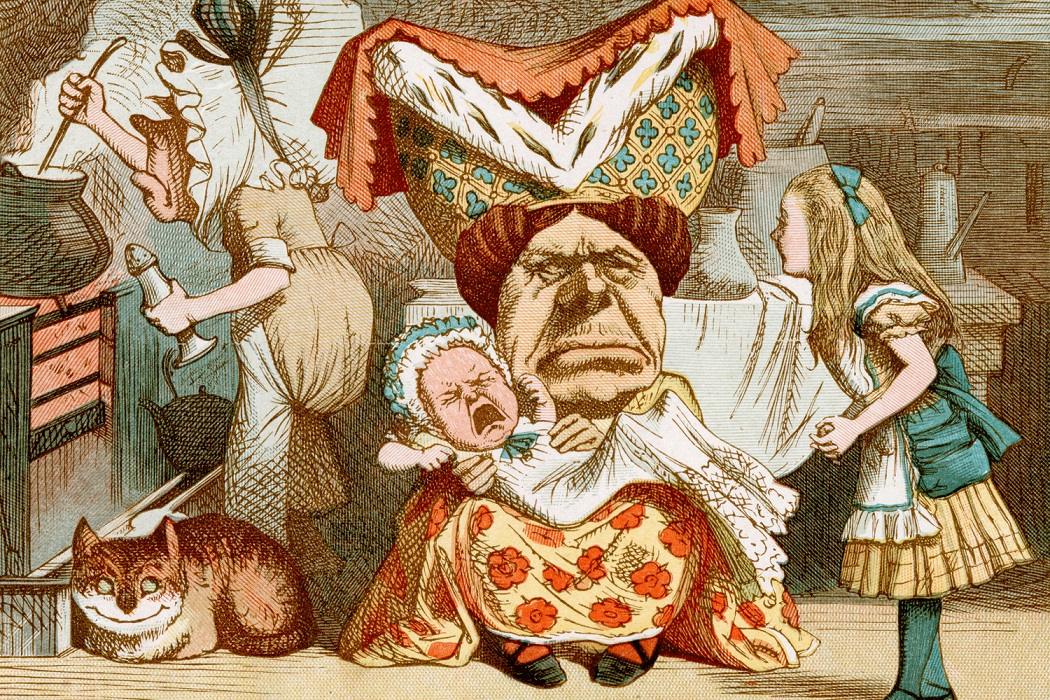
Alice books
In 1856, Dean Henry Liddell arrived at Christ Church at Oxford University, bringing with him his young family, all of whom would figure largely in Dodgson's life over the following years, and would greatly influence his writing career. Dodgson became close friends with Liddell's wife, Lorina, and their children, particularly the three sisters Lorina, Edith, and Alice Liddell. He was widely assumed for many years to have derived his own "Alice" from Alice Liddell; the acrostic poem at the end of Through the Looking-Glass spells out her name in full, and there are also many superficial references to her hidden in the text of both books. It has been noted that Dodgson himself repeatedly denied in later life that his "little heroine" was based on any real child, and he frequently dedicated his works to girls of his acquaintance, adding their names in acrostic poems at the beginning of the text. Gertrude Chataway's name appears in this form at the beginning of The Hunting of the Snark, and it is not suggested that this means that any of the characters in the narrative are based on her.
Information is scarce (Dodgson's diaries for the years 1858–1862 are missing), but it seems clear that his friendship with the Liddell family was an important part of his life in the late 1850s, and he grew into the habit of taking the children on rowing trips (first the boy, Harry, and later the three girls) accompanied by an adult friend to nearby Nuneham Courtenay or Godstow.
It was on one such expedition on 4 July 1862 that Dodgson invented the outline of the story that eventually became his first and greatest commercial success. He told the story to Alice Liddell and she begged him to write it down, and Dodgson eventually (after much delay) presented her with a handwritten, illustrated manuscript entitled Alice's Adventures Under Ground in November 1864.
Before this, the family of friend and mentor George MacDonald read Dodgson's incomplete manuscript, and the enthusiasm of the MacDonald children encouraged Dodgson to seek publication. In 1863, he had taken the unfinished manuscript to Macmillan the publisher, who liked it immediately. After the possible alternative titles were rejected – Alice Among the Fairies and Alice's Golden Hour – the work was finally published as Alice's Adventures in Wonderland in 1865 under the Lewis Carroll pen-name, which Dodgson had first used some nine years earlier. The illustrations this time were by Sir John Tenniel; Dodgson evidently thought that a published book would need the skills of a professional artist. Annotated versions provide insights into many of the ideas and hidden meanings that are prevalent in these books. Critical literature has often proposed Freudian interpretations of the book as "a descent into the dark world of the subconscious", as well as seeing it as a satire upon contemporary mathematical advances.
The overwhelming commercial success of the first Alice book changed Dodgson's life in many ways. The fame of his alter ego "Lewis Carroll" soon spread around the world. He was inundated with fan mail and with sometimes unwanted attention. Indeed, according to one popular story, Queen Victoria herself enjoyed Alice in Wonderland so much that she commanded that he dedicate his next book to her, and was accordingly presented with his next work, a scholarly mathematical volume entitled An Elementary Treatise on Determinants. Dodgson himself vehemently denied this story, commenting "... It is utterly false in every particular: nothing even resembling it has occurred"; and it is unlikely for other reasons. As T. B. Strong comments in a Times article, "It would have been clean contrary to all his practice to identify [the] author of Alice with the author of his mathematical works" He also began earning quite substantial sums of money but continued with his seemingly disliked post at Christ Church.
Late in 1871, he published the sequel Through the Looking-Glass, and What Alice Found There. (The title page of the first edition erroneously gives "1872" as the date of publication.